image of title for blog post: Rabbit Adaptations and Fun Facts

When spring arrives and Easter is near, the most popular animal to learn about during science in 1st grade – and even kindergarten or 2nd grade, is the rabbit. 

Rabbits are adorable animals with unique adaptations that help them survive in the wild. If you’re teaching a lesson about animal adaptations, body parts, or mammals, keep reading and get all the details. 

This blog post is filled with resources and suggestions for teaching a science lesson about rabbit adaptations.

  • Discuss the external body parts.
  • Watch the slideshow with your class.
  • Read the book and watch the online read aloud video.
  • Share fun facts during group discussions


Animal Adaptations of Rabbits

Rabbits have many adaptations that have developed to aid them in surviving in their habitat. These inherited traits include physical body parts and coverings. 

Rabbit physical traits and adaptations include:

  • tail
  • nose
  • claws
  • fur
  • ears
  • back legs
 
Each structure has a function that could mean life or death to the rabbit. Without the external body part, the animal may not survive or produce offspring.
 

Using photos help students see up close and personal each inherited trait. All students can learn from photos… especially your students who are visual learners.

Rabbit Adaptations Slideshow

A picture is worth a thousand words – so let’s use rabbit photos to “zoom in” on the adaptations these animals possess.

There is no audio or talking in the video… allowing you, the teacher, to read the words on the screen and/or add more information as the slideshow plays. Pause the video and hold a discussion with your students about each body part and try to predict the purpose – how it might help the animal.
image of photo, adaptation description, and purpose cards students can sort and match

Rabbit Book for your Primary Classroom

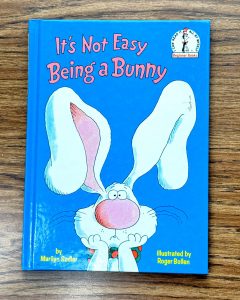
This is one of my favorite books to read to the class. It’s an adorable story about a bunny who isn’t happy with his life.

Read It’s Not Easy Being a Bunny by Marilyn Sadler.

Although the story is fiction, you can discuss with your students which adaptations the rabbit is missing when he goes to live with the birds or the possum or the skunk, etc.

You can purchase the book on Amazon with this affiliate link: https://amzn.to/4qC2lS7

As an Amazon Associate I earn from qualifying purchases

Capture their Attention with a Rabbit Video

This video of the book, Home for a Bunny by Margaret Wise Brown, is a good companion to the book above. 

This book is also fiction. However, both books are very similiar allowing you to compare them with your students. 

  • What were the bunnies both looking for? 
  • Which other animals were in the stories? 
  • Were the endings the same? 
  • Where did the bunnies in each book make their home?

Fun Facts about Rabbits

Ready to learn even more about rabbits? These fun facts will help build your own background knowledge so you can confidently answer your students’ curious questions.

  • babies are born hairless
  • their eyes open after 10 days
  • a group of babies is called a fluffle or colony
  • baby is called a kitten or kit
  • female rabbits are called doe
  • male rabbits are called buck
  • rabbits are social and live in groups called a fluffle
  • rabbits are mammals
  • they are herbivores – eating plants
  • 4 toes are on front feet while 5 are on back
  • ears turn 180 degrees to help listen for predators or danger – and also control body temperature by releasing heat (think rabbits in the desert)
  • claws can be used as protection and also help them dig a burrow where they live in the tunnels and rooms created underground (warren)
  • powerful back legs help them escape predators and move quickly
  • their eyes are on the sides of its head, giving them a wide field of vision to spot danger from nearly every direction
  • their teeth never stop growing

A behavioral adaptation is something an animal does to help it survive.

Rabbits do have a behavioral adaptation – they are more active during twilight. When it is dusk and dawn, the location of the sun makes it difficult for some animals to see. Predators of the rabbit like foxes, snakes, and birds will have a hard time searching for rabbits then. So, rabbits take advantage of this and come out of their burrows.

Teach the Rabbit Adaptations Lesson to your Class

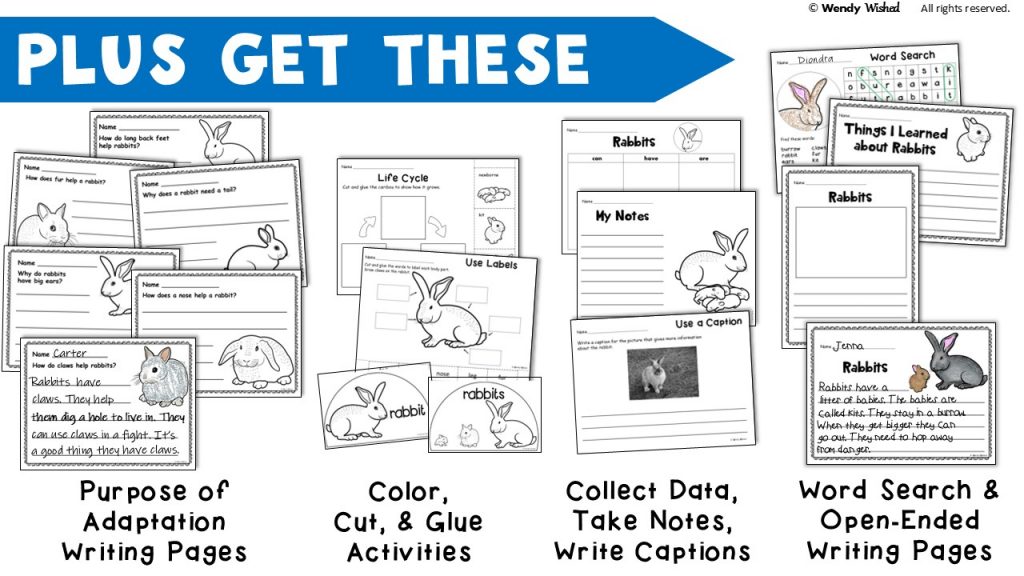
image of a rabbit photo, animal adaptation label and purpose cards, and writing sample are featured with a list of activities for the lesson

Don’t Forget: Share the Rabbit Fun Facts too.

Learning about Animal Adaptations Matter

Studying animal adaptations helps young learners understand how living things survive and thrive in their environments. By exploring how rabbits use their powerful legs to escape predators, their ears & eyes to stay alert, and their sharp claws to dig burrows underground, students can make real-world connections to the science concepts they’re learning. Encouraging curiosity about adaptations fosters critical thinking and a deeper appreciation for the natural world. Plus, fun facts make learning science engaging and memorable.

Prep your students for the Next Generation Science Standard, NGSS

From Molecules to Organisms: Structures and Processes

Disciplinary Core Ideas:  LS1.A: Structure and Function- All organisms have external parts

Have Teaching Materials at your Finger Tips

Stress-less and get everything you need:

Photos

Anchor Charts

Labels

Word Search

Craft

image of headband craft, labeling worksheet, word search, photo of rabbits, and writing page

Ready to teach your students

about animal adaptations and inherited traits?

Check out the resource here:

👉 Rabbit Adaptations 1st Grade Science Lesson Materials

image of rabbit photos, labels for chart, and adaptation definition for an animal adaptation science lesson
image of worksheets about rabbits
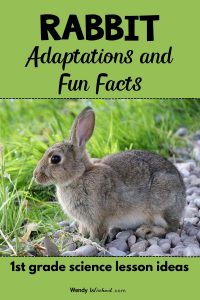
image of rabbit with title: Rabbit Adaptations and Fun Facts, 1st grade science lesson ideas
Pin for Later

Dive Deeper into Animal Adaptations

Wendy Wished blog for 1st and 2nd grade teacher blog logo with a shooting star
Let's survive the adventure of teaching.

Keep Reading