How to Address Learning Styles in your First Grade Classroom
Effective first grade teaching strategies start with understanding how young learners absorb information best based on their learning style – whether they are visual, auditory, or kinesthetic learners. As a first-grade teacher, you know that every child learns differently. Some students thrive with hands-on activities, some need to move their body, while others excel when they listen to instructions or watch demonstrations. Understanding different learning styles can help you create engaging and effective lesson plans that meet the needs of all your students. Using the right activities can make all the difference in keeping your students engaged and excited to learn!
What are the Different Learning Styles?
Most educational experts recognize three learning styles:
Visual Learners – These students understand concepts best through seeing.
Auditory Learners – These students absorb information best through listening and speaking.
Kinesthetic Learners – These hands-on learners retain best when there is movement and touch.
How to Support All Learning Styles in a First Grade Classroom
1. Visual Learners
Use anchor charts, labeled diagrams, or graphic organizers to introduce new concepts.
Incorporate picture books, photos, or videos into lessons.
Display step-by-step procedures for daily routines.
Assess your own lesson for visual learning activities:
Will you write on a chart or whiteboard to visuallly record information?
Do you have photos or a video to show the class?
Is there a bulletin board or anchor chart for students to look at and use as a reference?
Will you write out the steps for completing a task?
Are there mazes or puzzles among the worksheets students will complete?
2. Auditory Learners
Encourage classroom discussions and peer teaching.
Use rhymes, songs, and chants to reinforce new vocabulary and concepts.
Incorporate audiobooks and listening stations in your literacy center.
Include time to read books to your class.
Assess your own lesson for auditory learning activities:
Will students repeat info after you? "Matter can be a solid, liquid, or gas." Repeat.
Do you plan to let pairs of students retell each other details from your lesson?
Are "think alouds" planned in which you will tell students what you are thinking about the topic or how you will do the task?
Have you selected a task or worksheet which small groups can complete together?
Did you find a rhyme or change the words in a song to fit the topic being learned?
3. Kinesthetic Learners
Provide hands-on learning activities like cut-and-paste sorting exercises.
Use learning mazes, movement-based centers, and task cards for active engagement.
Incorporate STEM challenges and sensory bins to explore science and math.
Assess your own lesson for kinesthetic learning activities:
Is one of your activities a cut & paste activity or craft?
Have you planned a "Write the Room", task card, or sorting activity allowing students to move and get their wiggles out?
Will you use hand movements or gestures to help your students remember new vocabulary?
Using index cards, can students with definitions move around the room to find the student with the matching word card?
Do you have a beanbag or ball students can hold while they talk and then toss to another student for their turn?
Differentiating Instruction for Every Learning Style
Differentiating instruction helps ensure that all students succeed, no matter their learning style. Small group instruction, flexible seating, and hands-on learning activities in centers can also provide the variety first-graders need to be focused and involved.
Using effective first grade teaching strategies and creating lessons that appeal to all learning styles doesn’t have to be time-consuming! I’ve created engaging, hands-on activities designed to support visual, auditory, and kinesthetic learners in the first-grade classroom.
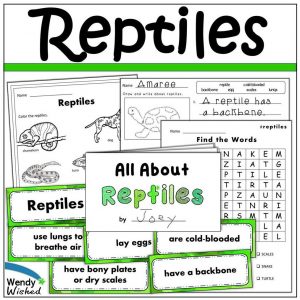
Check out this science resource
and see how learning styles can be included in the lesson.
Grab this print-and-go resource
to use to teach your visual, auditory, and kinesthetic learners.