
Simplify science lesson planning with these plant and animal adaptations materials for first grade students. Between limited prep time, scarce materials, and the pressure to meet standards, creating memorable lessons can feel overwhelming.
That’s where the Plants and Animals: Adaptations for Structures and Functions resource comes to the rescue. Preview how these ready-made teaching materials can save you time, reduce stress, and bring science to life in your classroom.

The Lesson’s Focus
“All organisms have external parts. Different animals use their body parts in different ways to hear, grasp objects, protect themselves, move from place to place, and seek, find, and take in food, water, and air. Plants also have different parts that help them survive and grow.”
Source: Next Generation Science Standard, LS 1-A
What’s Included to Make Teaching Easier?
-
- Anchor Chart: Ready-to-use visual introduces key vocabulary and concepts without extra prep.
-
- Photo and Label Sorting Activity: Interactive tasks that help students categorize adaptations by their purpose, such as protection or food.
-
- Writing Prompts: Images and descriptions of plants and animals with unique adaptations—perfect for sparking curiosity.
Observe Animal and Plant Adaptations
These science resources come with photos of animals as well as plants so you can check off both concepts on your science curriculum’s scope and sequence. There are 11 plant adaptations and 7 animal adaptations. With all the photos you can teach for more than just a day or two.
Start with the photos and hit the Speaking and Listening standards. Your students will love looking at the real photographs. They can start to develop their skill for observing – just like real scientists! Your students can look at the photos and discuss what they see and what they already know. Then move on to making predictions of how each trait might help the plants and animals survive.
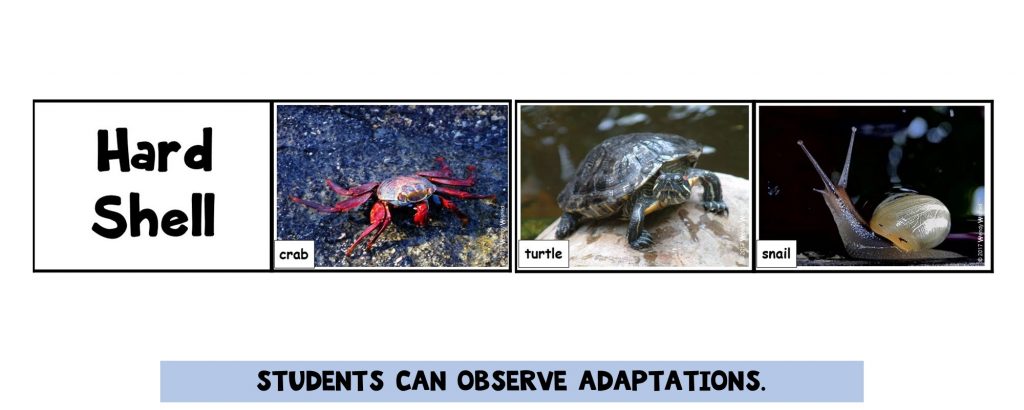
Along with the photos, you’ll have word cards to pull out during discussions. Build your students’ vocabulary as you build their knowledge. Be sure to praise them and notice them using the new vocabulary. They’ll feel so proud.
Once you teach the first lesson and model how to use the materials, you can be flexible to adjust how you use the materials. Teach another adaptation in small groups. A group of higher-level students can work together as they focus on yet another adaptation. After this gradual release of responsibility, assign individual students an adaptation to focus on by themselves.
The cards and photos are great for sorting as well. Use them as a center activity or during a small group activity. Students will need to notice the external parts of the plants and animals to sort them correctly.
Predict and Write about the Adaptation’s Purpose
Two writing prompt pages are included as well. This provides you with an opportunity to differentiate and meet the needs of your students.
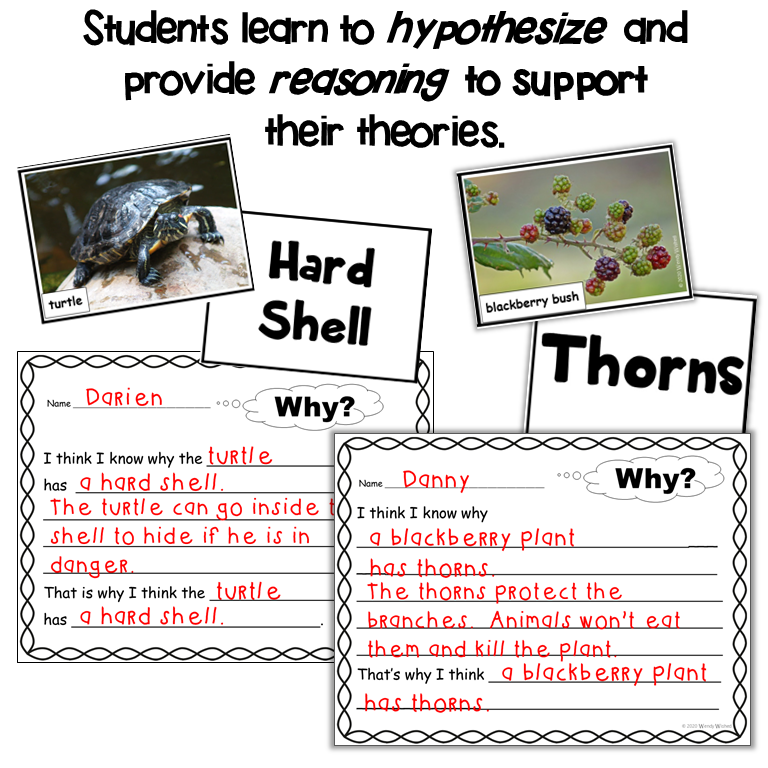
Having two writing versions also allows you to use one for whole group writing lessons and/or the other version during a small group activity. Use the page with more words provided first to help support your writers. Then use the second version. You could even provide paper without any sentence starters once your students have had practice writing. In addition, you can place copies of the pages in a writing center or have them ready for early finishers or to use for morning work.
Teach Animal and Plant Adaptations in your Classroom
You’ll stress less about teaching when you have everything you need at your fingertips. Photos, labels, and writing pages support you as you teach the information, have students recall and apply what they have learned, and then write the information in their own words.
With the right materials, your lesson on animal and plant adaptations will be easy to teach.
-
- Photos help you introduce the types of adaptations and encourage discussion.
-
- Word cards build student knowledge and vocabulary.
-
- Writing activities have students put the learned information into their own words.
Ready to simplify your science planning? Preview the materials and bring hassle-free, impactful lessons to your classroom today.
When your students have a good foundation and knowledge about animal and plant adaptations, take the next step. Teach them how inventions can be inspired by them too in this post!